

Wonderseekers, the charity behind Winchester Science Centre, and Science Projects, the charity behind the Observatory Science Centre and Museum, have announced that the Science Projects exhibit design and build workshop has become part of Wonderseekers.
The two charities have a long-standing relationship and share a commitment to inspiring curiosity and helping people engage with science through hands-on learning. The move marks an exciting new chapter for both organisations, creating opportunities for collaboration, innovation and growth.
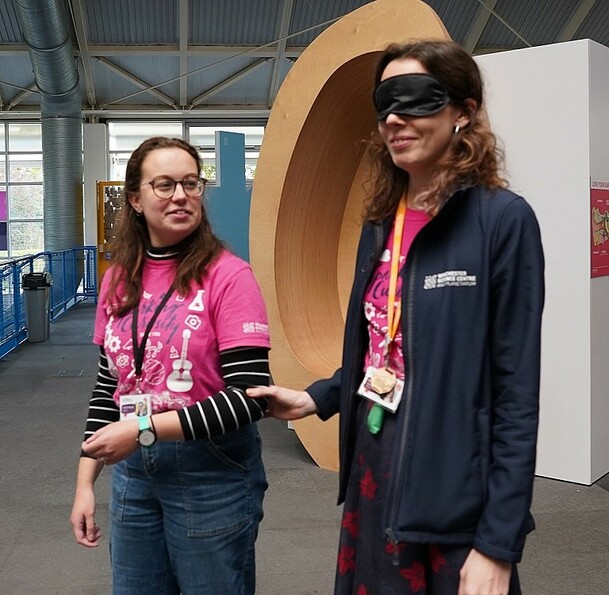
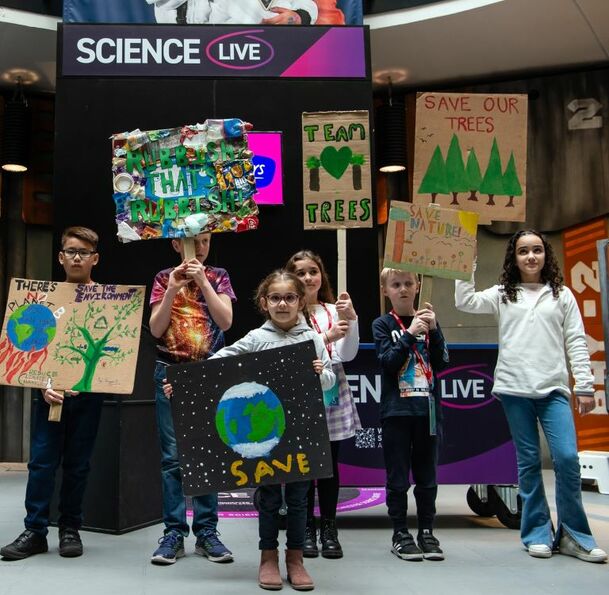
With Wonderseekers and the Science Projects workshop both based in Hampshire, the move brings together the workshop's established expertise in engineering, design and fabrication with Wonderseekers' strengths in accessibility, co-creation, science interpretation, audience engagement and impact evaluation. This includes Wonderseekers' award-winning approach to working with children and young people, whose voices help shape the development of engaging and inclusive science experiences.
Over 40 years, the Science Projects workshop has established an international reputation for creating innovative, hands-on exhibits for science centres, museums and visitor attractions across the UK and beyond. As part of Wonderseekers, the workshop will build on this legacy, offering clients a more comprehensive service spanning concept development, audience research, design, manufacture, installation and evaluation.
The move also creates opportunities to strengthen the sustainability and efficiency of exhibit development. By bringing complementary expertise together, Wonderseekers will be better positioned to deliver projects through a more integrated approach, reducing the need for multiple suppliers and exploring opportunities to minimise the environmental impact of design, manufacture and installation.
Looking ahead, Wonderseekers will seek to build on the workshop's established international relationships, including its history of collaborative projects in Scandinavia, while exploring opportunities to develop new partnerships and expand into additional markets.
The expanded team will also look beyond traditional science centres, supporting museums, galleries, zoos, aquariums and other cultural and visitor attractions to create inspiring, accessible and engaging experiences for audiences of all ages.
The transfer will allow the Observatory Science Centre and Museum to focus on bringing a unique part of the world’s scientific heritage to the public. It has embarked on a landmark capital development plan to reimagine public engagement with the stunning modernist observatory and collection of historic telescopes which played a leading role in astronomy during the Cold War years. It is also excited to be supporting Bader College, Queens and Nattergal on their fantastic re-wilding project. Bringing biodiversity to the 240 acres of the Herstmonceux estate where the Observatory is located will mean that visitors to the Observatory will find themselves visiting a science centre and museum in the centre of an enormous science experiment.
Ben Ward, Chief Executive of Wonderseekers, said:
"Science Projects has an outstanding reputation for creating engaging, high-quality science exhibits that inspire curiosity and learning. We've worked together successfully in the past and have always shared similar values and ambitions. Bringing the Science Projects workshop into Wonderseekers creates an exciting opportunity to combine our strengths, broaden our impact and offer clients a truly holistic service, from engineering and fabrication through to audience insight and accessibility.”
The Science Projects workshop team joined Wonderseekers on 15 October 2026, with the public announcement being made at the Association for Science and Discovery Centres Conference 2026 which took place on 14-15 October at Techniquest, Cardiff, where Ben Ward, Wonderseekers’ CEO, shared the future ambitions for the combined organisation.
Together Wonderseekers and the Science Projects workshop are committed to creating experiences that spark curiosity, inspire discovery and help more people engage with science, wherever they are in the world.